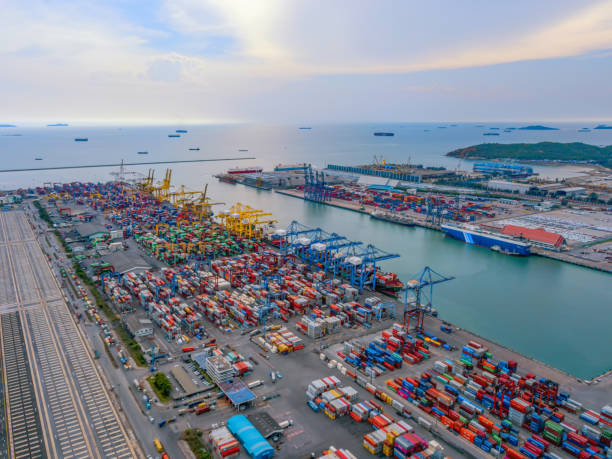
With the development of Thailand's manufacturing, logistics and port operations, the demand for overhead cranes in the market has expanded. Trade data from the past shows that the total import volume of overhead cranes reached 17.7 million US dollars, while the export volume was only 771,000 US dollars, indicating a high dependence on imports; 91.65% of these imports came from China, highlighting China's dominant position as the main supplier of overhead cranes in Thailand and also reflecting the insufficiency of local production capacity in Thailand.
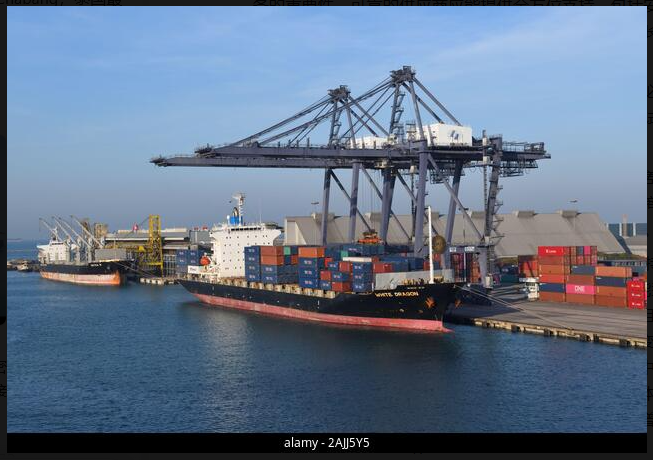
Thailand's overhead crane market is developing steadily with optimized structure. On the demand side, the upgrading of the manufacturing industry and the layout of emerging industries such as new energy vehicles have driven the demand for cranes in the intelligent and precision fields, and the total demand has increased steadily.
The trade pattern is still dominated by "high imports and low exports", but the import structure has been optimized, with the proportion of imported intelligent and energy-saving cranes from China increasing; the Thai government encourages enterprises to update automated equipment, further expanding the scale of imports.
In terms of production capacity, local production in Thailand is still dominated by the assembly of small and medium-sized equipment, with weak production capacity for core components and large cranes, and the pattern of relying on imports remains unchanged; the new rules on origin certification have limited impact on its import market.
In terms of competition, imported brands dominate the market, and Chinese brands have consolidated their position with advantages such as cost performance; some Thai enterprises have begun to cooperate with Chinese enterprises to explore localized production, but it is difficult to change the import-dominated pattern in the short term.
Overall, the Thai market has strong demand, the pattern of import dominance and China as the core supplier remains unchanged, the market is transforming towards intelligence and greenization, and there is great room for growth in the future, but the shortcoming of insufficient local production capacity cannot be made up in the short term.
With the continuous development of Thailand's manufacturing, logistics and port industries, the market demand for overhead cranes has been expanding. Past trade data indicates that the total import volume of overhead cranes in the country reached 17.7 million US dollars, while the export volume was only 771,000 US dollars, showing a high degree of dependence on imports; currently, about 92% of Thailand's overhead cranes are imported from China, and Chinese suppliers have basically taken control of the local market dominance.
I. Core Reasons Why Chinese Suppliers Dominate Thailand's Overhead Crane Market
More Competitive Prices: Compared with similar products from Europe, the United States and Japan, Chinese cranes are more economical and affordable, with prominent cost-performance advantages.
Complete Product Range: The lifting capacity covers 0.5 tons to 1000 tons, which can meet the diverse lifting needs of different industries and operating scenarios.
Outstanding Reliability: Products are strictly produced in accordance with international standards, and Chinese suppliers have mature export experience, making product quality more guaranteed.
Flexible Procurement Modes: It can provide whole-machine export, or choose to export spare parts and assemble them locally in Thailand to meet the personalized needs of different customers.
It is these advantages that make Chinese cranes the most practical and cost-effective choice in the minds of Thai customers.
II. China-Thailand Relevant Policies and Tariff Influencing Factors
1. Basic Tariffs and Value-Added Tax (VAT): Thailand's import tariff on industrial machinery and equipment (including overhead cranes) is usually between 0-10%, and the specific tax rate depends on the HS code classification and whether trade agreement preferences are enjoyed; in addition to tariffs, an additional 7% VAT must be paid.
2. Impact of Distribution Costs: If customers import equipment through distributors or agents, the final purchase cost of the equipment will be further increased.
III. Advantages Brought by the Free Trade Agreement (FTA)
1. Both Thailand and China are member states of the China-ASEAN Free Trade Area (CAFTA). Under this framework, most crane products can enjoy a 0% import tariff as long as they hold a FORM E certificate, which brings great competitive advantages to Chinese suppliers.
2. In contrast, importing similar equipment from Europe, Japan or the United States requires bearing higher tariff costs, which further consolidates the competitiveness of Chinese suppliers in the Thai market.
IV. Driving Role of the Government's Infrastructure Development Plan
3. The Thai government is actively promoting the Eastern Economic Corridor (EEC) initiative, which covers the construction of ports, railways, airports, industrial parks and other fields. These key projects have directly driven the market demand for overhead cranes, gantry cranes and electric hoists.
4. In addition, the government also provides certain tax reductions and financial support for infrastructure and manufacturing investment, indirectly promoting enterprises to upgrade or purchase new lifting equipment, further expanding the scale of market demand.
V. Practical Skills for Thai Enterprises to Choose Crane Suppliers
The Thai market has a strong demand for overhead cranes, but due to the limitation of local manufacturing capacity, most enterprises need to rely on imports. Therefore, choosing a suitable crane supplier is crucial to ensuring production efficiency and achieving long-term investment returns. The specific suggestions are as follows:
1. Focus on Product Quality and International Certifications: As large-scale industrial equipment, safety is the primary prerequisite for cranes. It is recommended to give priority to suppliers with international certifications such as ISO, CE and SGS to ensure that products meet global general standards; high-quality equipment not only operates more stably and reliably, but also can effectively reduce long-term maintenance costs.
2. Attach Importance to the Evaluation of After-Sales Service Capabilities: Many Thai customers pay too much attention to price when purchasing, but ignore the importance of after-sales service. A reliable supplier should be able to provide comprehensive support, including installation guidance, operator training, remote technical assistance, spare parts supply and on-site engineering support, to ensure the long-term stable operation of equipment and minimize downtime losses.
3. Consider Cost-Effectiveness, Not Just Pursue Low Prices: The cheapest product is not necessarily the best choice. Enterprises should comprehensively consider the total cost of ownership, including purchase cost, transportation cost, installation and commissioning cost and long-term maintenance expenses.
4. Pay Attention to Flexibility and Customization Capabilities: Different industries have different needs for cranes; some industries focus on lifting tonnage, while others have special requirements for span and lifting height. High-quality suppliers should be able to provide customized solutions according to the specific needs of customers, rather than only providing standardized products.
Due to Thailand's heavy dependence on imports, Chinese suppliers have become the most trustworthy partners in the local industry. Whether you need a standard crane solution or a customized design based on on-site conditions, choose us. Suitongcrane is always ready to be your trustworthy overhead crane supplier in Thailand.